10 AI Projects Students Can Build to Strengthen Their Resume in 2026
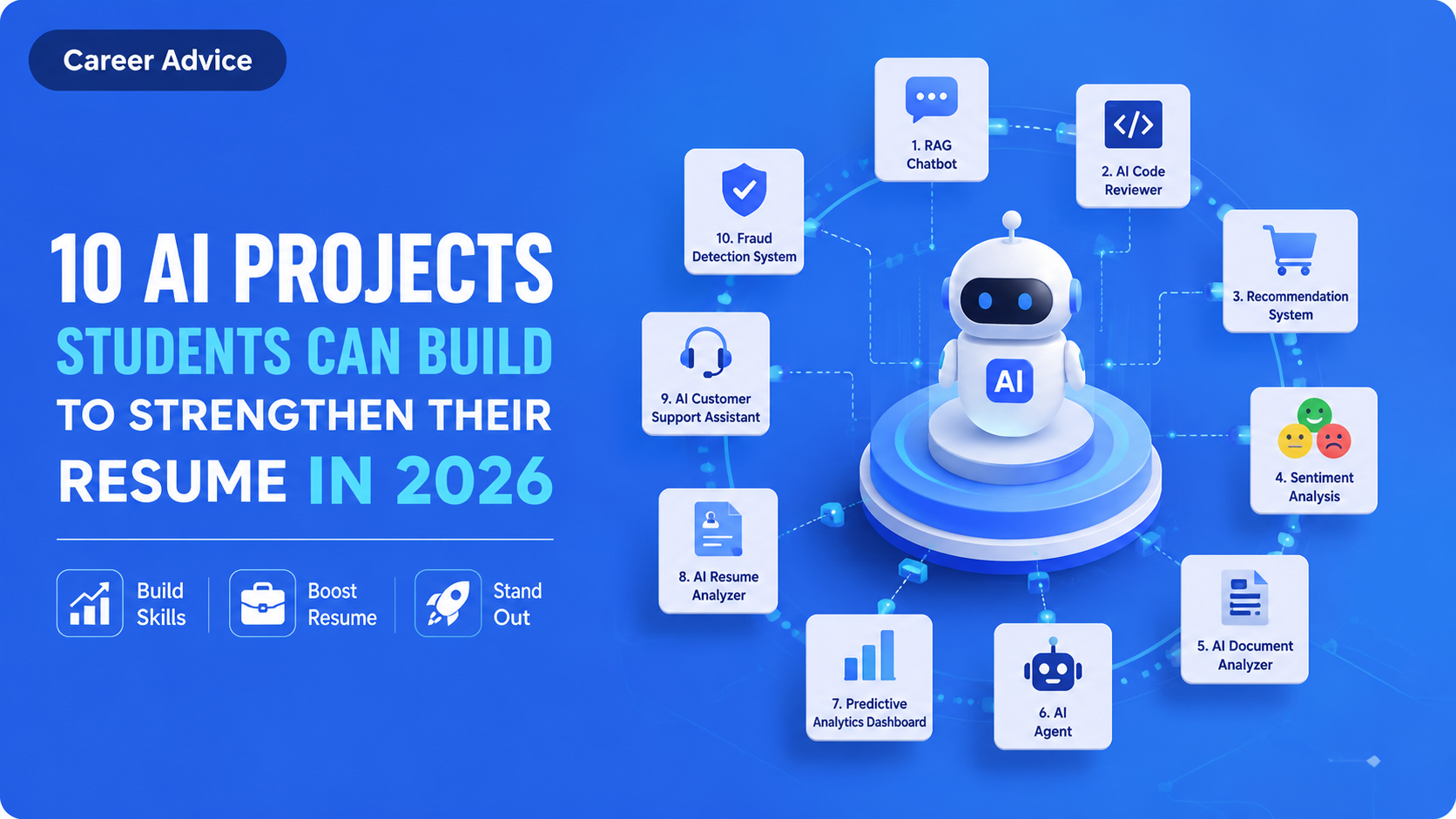
Artificial Intelligence is no longer just a buzzword, it has become one of the most valuable skills for students entering the technology industry. But there is an important difference between learning AI and demonstrating AI skills. Completing online courses and watching tutorials can help you understand concepts, but a strong AI project can show recruiters that you know how to apply those concepts to real-world problems. If you are a student looking to build your portfolio, prepare for placements, or strengthen your resume in 2026, this guide covers 10 AI projects that demonstrate practical and industry-relevant skills.
Why AI Projects Matter for Your Resume
A good AI project can demonstrate much more than your ability to train a model.
Depending on the project, you may demonstrate skills such as:
• Python programming
• Machine Learning
• Deep Learning
• Natural Language Processing
• Large Language Models (LLMs)
• Retrieval-Augmented Generation (RAG)
• APIs and backend development
• Databases and vector databases
• Data visualization
• Model deployment
• Cloud technologies
• AI agents and automation
Instead of simply writing "I know Python and Machine Learning" on your resume, a project allows you to show how you actually used those technologies.
So, let's look at some projects worth building in 2026.
1. RAG-Based AI Chatbot
What it is
A Retrieval-Augmented Generation (RAG) chatbot allows users to ask questions about a specific collection of documents or knowledge base.
For example, you could build a chatbot that answers questions about:
• College regulations
• Research papers
• Company documents
• Product manuals
• Course materials
• Government documents
Instead of relying only on the knowledge stored inside an LLM, the system retrieves relevant information from a knowledge base and uses it to generate an answer.
𝗧𝗲𝗰𝗵𝗻𝗼𝗹𝗼𝗴𝗶𝗲𝘀 𝘆𝗼𝘂 𝗰𝗮𝗻 𝘂𝘀𝗲
• Python
• LangChain or LlamaIndex
• OpenAI or another LLM
• Embedding models
• FAISS, Chroma, Pinecone or another vector database
• FastAPI
• Streamlit or React
𝗦𝗸𝗶𝗹𝗹𝘀 𝗱𝗲𝗺𝗼𝗻𝘀𝘁𝗿𝗮𝘁𝗲𝗱
𝗟𝗟𝗠𝘀 + 𝗥𝗔𝗚 + 𝗩𝗲𝗰𝘁𝗼𝗿 𝗦𝗲𝗮𝗿𝗰𝗵 + 𝗕𝗮𝗰𝗸𝗲𝗻𝗱 𝗗𝗲𝘃𝗲𝗹𝗼𝗽𝗺𝗲𝗻𝘁 + 𝗔𝗜 𝗔𝗽𝗽𝗹𝗶𝗰𝗮𝘁𝗶𝗼𝗻 𝗗𝗲𝘃𝗲𝗹𝗼𝗽𝗺𝗲𝗻𝘁
𝗥𝗲𝘀𝘂𝗺𝗲 𝘃𝗮𝗹𝘂𝗲
This is one of the strongest projects for students interested in 𝗚𝗲𝗻𝗲𝗿𝗮𝘁𝗶𝘃𝗲 𝗔𝗜 and 𝗟𝗟𝗠 𝗮𝗽𝗽𝗹𝗶𝗰𝗮𝘁𝗶𝗼𝗻 𝗱𝗲𝘃𝗲𝗹𝗼𝗽𝗺𝗲𝗻𝘁.
2. AI Code Reviewer
What it is
Build an AI-powered tool that reviews source code and provides feedback.
A user could submit code and receive suggestions about:
• Bugs
• Code quality
• Security issues
• Performance
• Readability
• Best practices
You can also make the system explain why a particular piece of code should be changed.
𝗧𝗲𝗰𝗵𝗻𝗼𝗹𝗼𝗴𝗶𝗲𝘀 𝘆𝗼𝘂 𝗰𝗮𝗻 𝘂𝘀𝗲
• Python
• LLM API
• FastAPI
• GitHub API
• Prompt Engineering
• Docker
• React or Streamlit
𝗔𝗱𝘃𝗮𝗻𝗰𝗲𝗱 𝘃𝗲𝗿𝘀𝗶𝗼𝗻
Take it further by creating a GitHub integration that automatically reviews pull requests.
For example:
𝗗𝗲𝘃𝗲𝗹𝗼𝗽𝗲𝗿 𝗰𝗿𝗲𝗮𝘁𝗲𝘀 𝗣𝗥 → 𝗔𝗜 𝗮𝗻𝗮𝗹𝘆𝘇𝗲𝘀 𝗰𝗼𝗱𝗲 → 𝗔𝗜 𝗶𝗱𝗲𝗻𝘁𝗶𝗳𝗶𝗲𝘀 𝗶𝘀𝘀𝘂𝗲𝘀 → 𝗔𝗜 𝗴𝗲𝗻𝗲𝗿𝗮𝘁𝗲𝘀 𝗿𝗲𝘃𝗶𝗲𝘄 𝗰𝗼𝗺𝗺𝗲𝗻𝘁𝘀
Skills demonstrated
𝗟𝗟𝗠𝘀 + 𝗔𝗣𝗜𝘀 + 𝗚𝗶𝘁𝗛𝘂𝗯 𝗜𝗻𝘁𝗲𝗴𝗿𝗮𝘁𝗶𝗼𝗻 + 𝗦𝗼𝗳𝘁𝘄𝗮𝗿𝗲 𝗘𝗻𝗴𝗶𝗻𝗲𝗲𝗿𝗶𝗻𝗴 + 𝗔𝘂𝘁𝗼𝗺𝗮𝘁𝗶𝗼𝗻
This project is particularly useful for students interested in AI engineering or software development.
3. AI Recommendation System
What it is
𝗥𝗲𝗰𝗼𝗺𝗺𝗲𝗻𝗱𝗮𝘁𝗶𝗼𝗻 𝘀𝘆𝘀𝘁𝗲𝗺𝘀 are used by platforms to recommend products, movies, music, courses and other content.
You can build your own recommendation engine that recommends items based on user preferences.
For example:
A student selects "Python, AI, Machine Learning"
The system recommends relevant courses or projects.
𝗧𝗲𝗰𝗵𝗻𝗼𝗹𝗼𝗴𝗶𝗲𝘀 𝘆𝗼𝘂 𝗰𝗮𝗻 𝘂𝘀𝗲
• Python
• Pandas
• NumPy
• Scikit-learn
• Machine Learning
• Collaborative Filtering
• Content-Based Filtering
• FastAPI
Advanced version
Create a hybrid recommendation system that combines:
𝗖𝗼𝗻𝘁𝗲𝗻𝘁-𝗯𝗮𝘀𝗲𝗱 𝗳𝗶𝗹𝘁𝗲𝗿𝗶𝗻𝗴 + 𝗖𝗼𝗹𝗹𝗮𝗯𝗼𝗿𝗮𝘁𝗶𝘃𝗲 𝗳𝗶𝗹𝘁𝗲𝗿𝗶𝗻𝗴
Skills demonstrated
𝗠𝗮𝗰𝗵𝗶𝗻𝗲 𝗟𝗲𝗮𝗿𝗻𝗶𝗻𝗴 + 𝗗𝗮𝘁𝗮 𝗣𝗿𝗼𝗰𝗲𝘀𝘀𝗶𝗻𝗴 + 𝗥𝗲𝗰𝗼𝗺𝗺𝗲𝗻𝗱𝗮𝘁𝗶𝗼𝗻 𝗔𝗹𝗴𝗼𝗿𝗶𝘁𝗵𝗺𝘀 + 𝗔𝗣𝗜 𝗗𝗲𝘃𝗲𝗹𝗼𝗽𝗺𝗲𝗻𝘁
This is an excellent project if you want to demonstrate core Machine Learning skills rather than only working with LLMs.
4. Sentiment Analysis System
What it is
Build an 𝗡𝗟𝗣 𝗮𝗽𝗽𝗹𝗶𝗰𝗮𝘁𝗶𝗼𝗻 that determines whether a piece of text expresses a:
𝗣𝗼𝘀𝗶𝘁𝗶𝘃𝗲 𝘀𝗲𝗻𝘁𝗶𝗺𝗲𝗻𝘁
𝗡𝗲𝗴𝗮𝘁𝗶𝘃𝗲 𝘀𝗲𝗻𝘁𝗶𝗺𝗲𝗻𝘁
𝗡𝗲𝘂𝘁𝗿𝗮𝗹 𝘀𝗲𝗻𝘁𝗶𝗺𝗲𝗻𝘁
For example, the system could analyze customer reviews.
Input:
"The product is excellent and delivery was extremely fast."
Output:
Positive - 94% confidence
𝗧𝗲𝗰𝗵𝗻𝗼𝗹𝗼𝗴𝗶𝗲𝘀 𝘆𝗼𝘂 𝗰𝗮𝗻 𝘂𝘀𝗲
• Python
• NLP
• Scikit-learn
• NLTK or spaCy
• Transformers
• BERT
• FastAPI
𝗔𝗱𝘃𝗮𝗻𝗰𝗲𝗱 𝘃𝗲𝗿𝘀𝗶𝗼𝗻
Instead of simply classifying positive or negative sentiment, detect multiple emotions such as:
𝗛𝗮𝗽𝗽𝘆
𝗔𝗻𝗴𝗿𝘆
𝗦𝗮𝗱
𝗘𝘅𝗰𝗶𝘁𝗲𝗱
𝗙𝗿𝘂𝘀𝘁𝗿𝗮𝘁𝗲𝗱
𝗦𝗸𝗶𝗹𝗹𝘀 𝗱𝗲𝗺𝗼𝗻𝘀𝘁𝗿𝗮𝘁𝗲𝗱
NLP + Text Classification + Transformers + Model Evaluation
This is a good project for students who want to build a strong foundation in Natural Language Processing.
5. AI Document Analyzer
What it is
Create an AI application that can analyze uploaded documents and extract useful information.
Users could upload:
• PDFs
• Resumes
• Reports
• Invoices
• Research papers
• Contracts
The system could extract information, summarize the document, answer questions and identify important sections.
Example workflow
𝗨𝗽𝗹𝗼𝗮𝗱 𝗣𝗗𝗙
↓
𝗘𝘅𝘁𝗿𝗮𝗰𝘁 𝗧𝗲𝘅𝘁
↓
𝗣𝗿𝗼𝗰𝗲𝘀𝘀 𝗗𝗼𝗰𝘂𝗺𝗲𝗻𝘁
↓
𝗚𝗲𝗻𝗲𝗿𝗮𝘁𝗲 𝗘𝗺𝗯𝗲𝗱𝗱𝗶𝗻𝗴𝘀
↓
𝗦𝘁𝗼𝗿𝗲 𝗶𝗻 𝗩𝗲𝗰𝘁𝗼𝗿 𝗗𝗮𝘁𝗮𝗯𝗮𝘀𝗲
↓
𝗔𝘀𝗸 𝗤𝘂𝗲𝘀𝘁𝗶𝗼𝗻𝘀
↓
𝗔𝗜 𝗚𝗲𝗻𝗲𝗿𝗮𝘁𝗲𝘀 𝗔𝗻𝘀𝘄𝗲𝗿
Technologies you can use
• Python
• OCR
• LLMs
• RAG
• Vector databases
• FastAPI
• PDF processing libraries
Skills demonstrated
Document AI + RAG + NLP + LLMs + Backend Development
This is especially valuable because document intelligence has many real-world business applications.
6. AI Agent for Task Automation
What it is
AI agents go beyond simple question-and-answer systems.
An AI agent can be designed to:
𝗨𝗻𝗱𝗲𝗿𝘀𝘁𝗮𝗻𝗱 𝗮 𝗴𝗼𝗮𝗹 → 𝗣𝗹𝗮𝗻 𝘁𝗮𝘀𝗸𝘀 → 𝗨𝘀𝗲 𝘁𝗼𝗼𝗹𝘀 → 𝗣𝗲𝗿𝗳𝗼𝗿𝗺 𝗮𝗰𝘁𝗶𝗼𝗻𝘀 → 𝗘𝘃𝗮𝗹𝘂𝗮𝘁𝗲 𝗿𝗲𝘀𝘂𝗹𝘁𝘀
For example, you could build a research agent that:
• Receives a research topic
• Searches for information
• Extracts relevant content
• Summarizes findings
• Creates a structured report
Technologies you can use
• Python
• LLMs
• LangGraph or similar agent frameworks
• APIs
• Function calling
• Tool use
• Memory
• FastAPI
Advanced version
Build a multi-agent system where different agents handle different tasks.
For example:
𝗥𝗲𝘀𝗲𝗮𝗿𝗰𝗵 𝗔𝗴𝗲𝗻𝘁 → 𝗔𝗻𝗮𝗹𝘆𝘀𝗶𝘀 𝗔𝗴𝗲𝗻𝘁 → 𝗪𝗿𝗶𝘁𝗶𝗻𝗴 𝗔𝗴𝗲𝗻𝘁 → 𝗥𝗲𝘃𝗶𝗲𝘄 𝗔𝗴𝗲𝗻𝘁
Skills demonstrated
𝗔𝗴𝗲𝗻𝘁𝗶𝗰 𝗔𝗜 + 𝗟𝗟𝗠𝘀 + 𝗧𝗼𝗼𝗹 𝗖𝗮𝗹𝗹𝗶𝗻𝗴 + 𝗔𝗣𝗜𝘀 + 𝗪𝗼𝗿𝗸𝗳𝗹𝗼𝘄 𝗔𝘂𝘁𝗼𝗺𝗮𝘁𝗶𝗼𝗻
For students targeting Generative AI and AI engineering roles, this can be a very strong portfolio project.
7. Predictive Analytics Dashboard
What it is
Not every valuable AI project needs an LLM.
Build a dashboard that uses historical data to predict future outcomes.
Possible use cases include:
• Sales forecasting
• Customer churn prediction
• Student performance prediction
• Demand forecasting
• Revenue prediction
• Inventory forecasting
Example
A business provides historical sales data.
Your system analyzes:
• Previous sales
• Seasonality
• Product demand
• Customer behavior
• and predicts future sales.
• Technologies you can use
• Python
• Pandas
• Scikit-learn
• XGBoost
• SQL
• Power BI or Plotly
• FastAPI
Skills demonstrated
𝗠𝗮𝗰𝗵𝗶𝗻𝗲 𝗟𝗲𝗮𝗿𝗻𝗶𝗻𝗴 + 𝗗𝗮𝘁𝗮 𝗔𝗻𝗮𝗹𝘆𝘀𝗶𝘀 + 𝗣𝗿𝗲𝗱𝗶𝗰𝘁𝗶𝘃𝗲 𝗠𝗼𝗱𝗲𝗹𝗶𝗻𝗴 + 𝗗𝗮𝘁𝗮 𝗩𝗶𝘀𝘂𝗮𝗹𝗶𝘇𝗮𝘁𝗶𝗼𝗻
This project is ideal for students interested in Data Science and Machine Learning.
8. AI Resume Analyzer & Job Matcher
What it is
Create an AI application that analyzes a candidate's resume and compares it with a job description.
The system could identify:
• Matching skills
• Missing skills
• Relevant experience
• Keyword gaps
• Resume-job similarity
• It could also provide a compatibility score.
Example
Resume
Python, SQL, Machine Learning, FastAPI
Job Description
Python, SQL, Machine Learning, AWS, Docker
The system could identify:
Matched: Python, SQL, Machine Learning
Missing: AWS, Docker
Technologies you can use
• Python
• NLP
• LLMs
• Sentence Transformers
• Vector embeddings
• Cosine similarity
• FastAPI
Advanced version
Add an AI assistant that suggests improvements to specific sections of the resume.
Skills demonstrated
𝗡𝗟𝗣 + 𝗦𝗲𝗺𝗮𝗻𝘁𝗶𝗰 𝗦𝗲𝗮𝗿𝗰𝗵 + 𝗘𝗺𝗯𝗲𝗱𝗱𝗶𝗻𝗴𝘀 + 𝗟𝗟𝗠𝘀 + 𝗥𝗲𝗰𝗼𝗺𝗺𝗲𝗻𝗱𝗮𝘁𝗶𝗼𝗻
This project is also highly relatable to students because it solves a problem they personally understand.
9. AI Customer Support Assistant
What it is
Build an AI assistant capable of answering customer questions using a company's knowledge base.
Instead of creating a basic chatbot, connect the assistant to:
• FAQs
• Product documentation
• Support articles
• Company policies
• Product information
The assistant retrieves relevant information and generates contextual responses.
𝗔𝗱𝘃𝗮𝗻𝗰𝗲𝗱 𝗳𝗲𝗮𝘁𝘂𝗿𝗲𝘀
You can add:
• Conversation memory
• RAG
• Human handoff
• Ticket creation
• Sentiment detection
• CRM integration
• Analytics dashboard
Technologies you can use
• Python
• LLMs
• RAG
• FastAPI
• Vector database
• REST APIs
• React
Skills demonstrated
𝗟𝗟𝗠 𝗔𝗽𝗽𝗹𝗶𝗰𝗮𝘁𝗶𝗼𝗻 𝗗𝗲𝘃𝗲𝗹𝗼𝗽𝗺𝗲𝗻𝘁 + 𝗥𝗔𝗚 + 𝗔𝗣𝗜𝘀 + 𝗔𝘂𝘁𝗼𝗺𝗮𝘁𝗶𝗼𝗻 + 𝗙𝘂𝗹𝗹-𝗦𝘁𝗮𝗰𝗸 𝗗𝗲𝘃𝗲𝗹𝗼𝗽𝗺𝗲𝗻𝘁
This type of project can demonstrate how AI can solve an actual business problem.
10. AI-Powered Fraud Detection System
What it is
Build a Machine Learning system that identifies potentially fraudulent transactions.
The model can analyze features such as:
• Transaction amount
• Transaction frequency
• Location
• Time
• User behavior
• Transaction patterns
and classify transactions as potentially legitimate or suspicious.
Technologies you can use
• Python
• Pandas
• Scikit-learn
• XGBoost
• Classification algorithms
• Anomaly detection
• Data visualization
Advanced version
Create a real-time API where a transaction is submitted and the model immediately returns a risk score.
Skills demonstrated
𝗠𝗮𝗰𝗵𝗶𝗻𝗲 𝗟𝗲𝗮𝗿𝗻𝗶𝗻𝗴 + 𝗖𝗹𝗮𝘀𝘀𝗶𝗳𝗶𝗰𝗮𝘁𝗶𝗼𝗻 + 𝗔𝗻𝗼𝗺𝗮𝗹𝘆 𝗗𝗲𝘁𝗲𝗰𝘁𝗶𝗼𝗻 + 𝗙𝗲𝗮𝘁𝘂𝗿𝗲 𝗘𝗻𝗴𝗶𝗻𝗲𝗲𝗿𝗶𝗻𝗴 + 𝗔𝗣𝗜 𝗗𝗲𝘃𝗲𝗹𝗼𝗽𝗺𝗲𝗻𝘁
This is a strong project for students interested in Data Science, ML Engineering and FinTech.
How to Choose the Right AI Project
Don't choose a project simply because it sounds impressive.
Choose one based on the career you want.
Career Goal
Projects to Consider
AI Engineer
RAG Chatbot, AI Agent, AI Code Reviewer
ML Engineer
Recommendation System, Fraud Detection
Data Scientist
Predictive Analytics, Recommendation System
NLP Engineer
Sentiment Analysis, Document Analyzer
GenAI Engineer
RAG Chatbot, AI Agent, Document Analyzer
Full-Stack Developer
AI Support Assistant, AI Code Reviewer
Data Analyst
Predictive Analytics Dashboard
How to Make Your AI Project Stand Out
Building the project is only the beginning.
A basic project might not be enough to impress a recruiter.
Try adding these components.
𝟭. 𝗕𝘂𝗶𝗹𝗱 𝗮 𝗿𝗲𝗮𝗹 𝗽𝗿𝗼𝗯𝗹𝗲𝗺
Don't build something only because you found a tutorial for it.
Ask:
"What real problem does this solve?"
𝟮. 𝗖𝗿𝗲𝗮𝘁𝗲 𝗮 𝗽𝗿𝗼𝗽𝗲𝗿 𝗶𝗻𝘁𝗲𝗿𝗳𝗮𝗰𝗲
Don't stop at a Python notebook.
Create a usable application using technologies such as:
Streamlit
React
FastAPI
𝟯. 𝗗𝗲𝗽𝗹𝗼𝘆 𝘁𝗵𝗲 𝗽𝗿𝗼𝗷𝗲𝗰𝘁
A live demo can make your project much more impressive.
Consider deploying it using:
Docker
AWS
Azure
Google Cloud
Vercel
Render
𝟰. 𝗔𝗱𝗱 𝗮 𝗚𝗶𝘁𝗛𝘂𝗯 𝗿𝗲𝗽𝗼𝘀𝗶𝘁𝗼𝗿𝘆
Your repository should contain:
README
Project architecture
Installation instructions
Technologies used
Screenshots
API documentation
Sample inputs/outputs
𝟱. 𝗘𝘅𝗽𝗹𝗮𝗶𝗻 𝘆𝗼𝘂𝗿 𝗰𝗼𝗻𝘁𝗿𝗶𝗯𝘂𝘁𝗶𝗼𝗻
Don't write:
"Built an AI chatbot."
Instead, explain:
"Developed a RAG-based document question-answering system using embeddings and vector search, with a FastAPI backend and LLM-powered response generation."
The second version communicates much more technical depth.
Don't Build AI Projects Just for the Resume
One of the biggest mistakes students make is collecting projects without actually understanding them.
A recruiter may ask:
Why did you choose this model?
How does your RAG pipeline work?
Why did you use this vector database?
How did you evaluate your model?
What happens when the model gives an incorrect answer?
How did you deploy the application?
If you cannot answer these questions, simply having the project on your resume won't help much.
Build fewer projects, but understand them deeply.
A Better AI Project Roadmap for Students
If you're starting from scratch, don't immediately jump into advanced AI agents.
Follow a progression like this:
𝗣𝘆𝘁𝗵𝗼𝗻
↓
𝗗𝗮𝘁𝗮 𝗦𝘁𝗿𝘂𝗰𝘁𝘂𝗿𝗲𝘀 & 𝗟𝗶𝗯𝗿𝗮𝗿𝗶𝗲𝘀
↓
𝗠𝗮𝗰𝗵𝗶𝗻𝗲 𝗟𝗲𝗮𝗿𝗻𝗶𝗻𝗴
↓
𝗗𝗲𝗲𝗽 𝗟𝗲𝗮𝗿𝗻𝗶𝗻𝗴
↓
𝗡𝗟𝗣
↓
𝗧𝗿𝗮𝗻𝘀𝗳𝗼𝗿𝗺𝗲𝗿𝘀
↓
𝗟𝗟𝗠𝘀
↓
𝗥𝗔𝗚
↓
𝗔𝗜 𝗔𝗴𝗲𝗻𝘁𝘀
↓
𝗗𝗲𝗽𝗹𝗼𝘆𝗺𝗲𝗻𝘁
At every stage, build something.
That's how you move from 𝗹𝗲𝗮𝗿𝗻𝗶𝗻𝗴 𝗔𝗜 → 𝗯𝘂𝗶𝗹𝗱𝗶𝗻𝗴 𝗔𝗜 → 𝗱𝗲𝗺𝗼𝗻𝘀𝘁𝗿𝗮𝘁𝗶𝗻𝗴 𝗔𝗜 𝘀𝗸𝗶𝗹𝗹𝘀.
Final Thoughts
𝗧𝗵𝗲 𝗯𝗲𝘀𝘁 𝗔𝗜 𝗽𝗿𝗼𝗷𝗲𝗰𝘁 𝗶𝘀𝗻'𝘁 𝗻𝗲𝗰𝗲𝘀𝘀𝗮𝗿𝗶𝗹𝘆 𝘁𝗵𝗲 𝗺𝗼𝘀𝘁 𝗰𝗼𝗺𝗽𝗹𝗶𝗰𝗮𝘁𝗲𝗱 𝗼𝗻𝗲.
A simple project that solves a real problem, has a clean architecture, is properly deployed and is well documented can be more valuable than a complicated project that you don't understand.
If you're a student preparing for placements or building your portfolio in 2026, focus on projects that demonstrate practical skills, problem-solving ability and real-world implementation.
𝗦𝘁𝗮𝗿𝘁 𝘄𝗶𝘁𝗵 𝗼𝗻𝗲 𝗽𝗿𝗼𝗷𝗲𝗰𝘁.
𝗕𝘂𝗶𝗹𝗱 𝗶𝘁 𝗽𝗿𝗼𝗽𝗲𝗿𝗹𝘆.
𝗗𝗲𝗽𝗹𝗼𝘆 𝗶𝘁.
𝗗𝗼𝗰𝘂𝗺𝗲𝗻𝘁 𝗶𝘁.
𝗣𝘂𝘁 𝗶𝘁 𝗼𝗻 𝗚𝗶𝘁𝗛𝘂𝗯.
𝗧𝗵𝗲𝗻 𝗯𝘂𝗶𝗹𝗱 𝘆𝗼𝘂𝗿 𝗻𝗲𝘅𝘁 𝗼𝗻𝗲.
Your portfolio should show what you can build, not just what you have learned.
𝗟𝗼𝗼𝗸𝗶𝗻𝗴 𝗳𝗼𝗿 𝗮 𝗿𝗲𝗮𝗹-𝘄𝗼𝗿𝗹𝗱 𝗔𝗜 𝗽𝗿𝗼𝗷𝗲𝗰𝘁?
𝗣𝗿𝗼𝗷𝗲𝗰𝘁𝘀𝗛𝘂𝗯 helps students work on practical AI, Machine Learning and Generative AI projects with development guidance and mentorship.
Explore real-world project ideas, technologies and learning resources at 𝗣𝗿𝗼𝗷𝗲𝗰𝘁𝘀𝗛𝘂𝗯.